
I have been trying to rewrite my coaching philosophy recently, trying to update it and make it more relevant for my current coaching roles but have really struggled to define how I coach as it seems to change depending on the situation and the group and realised that I was trying to almost pigeon hole myself into one coaching style.

I preferred the description of my coaching toolbox, let me explain…
In my toolbox I prefer certain tools over others, and they probably get used more. But sometimes my favourite tools may not be the right tool for the job (I am not going to try and hammer a nail into the wall with my favourite screwdriver!)
I think it is more important to know what tools you prefer to use and why rather than say that you are only going to use a couple of tools. For example I prefer to use a lot of Q&A and stop stand still in one of my coaching environments because I have very limited coaching time across the year and want to get information across but also want to balance this with the players inputting in what they see. Going into another environment I might have the stop stand still coaching style in the bottom of my box because it isn’t relevant there.
But sometimes you have to use your non-favourite tools more often because they are the right tools for the job. My toolbox at home has 2 layers, a bottom layer where I tend to store the tools that I don’t use very often and a top layer where the most commonly used tools are kept, so I prefer to think about my coaching as what tools I would keep on my top shelf and which are on the bottom just in case I need to pull them out at some point.
I think if I try to outline my philosophy and make it specific to me, it would either be too general or too specific and not have the room to be flexible that you need as a coach. If I try to explain the tools in my toolbox this makes a lot more sense to me (and hopefully some of you if I haven’t lost you already!)
This potentially makes absolutely no sense to anyone else, but for me it has really helped to make my coaching style clearer. I do wonder if by asking coaches and clubs to outline their coaching philosophy if we are encouraging them to put themselves in one category and preventing them from exploring other methods of coaching that might be relevant to their players in that specific situation.
I also think that this is really important for a player to have their own toolbox. They may have a preferred way of playing and a particular style of play or team formation that suits them best that they might have in their top level of their toolkit but they also need to have other tactics in the bottom tray to pull out in case their first plan doesn’t work.


 One big skill I really want my players to have is the ability to problem solve. This is important on the pitch as I won’t always be able to tell them the answers to everything, my players are likely to play elsewhere but also it is a big confidence boost if they can figure out what is going on and improve it. It is also a key skill in every day life, trying to solve problems and find solutions will help my players in so many ways.
 more positive, relax more and keep in touch with my family and friends more. Although I may not have done it all the time I have definitely done it more. I am not sure if I have more things in the jar because of things that have happened or my perspective of the things that have happened, all I can say is that it feels fantastic.
 ) I have also started as an FA Affiliate Tutor this year, earlier than I had planned to but definitely not complaining! In terms of qualifications I have improved my understanding of how to develop the goalkeepers in my sessions by completing the goalkeeper level 2, I have also graduated with an MSc in Performance Coaching which will be a big load taken off.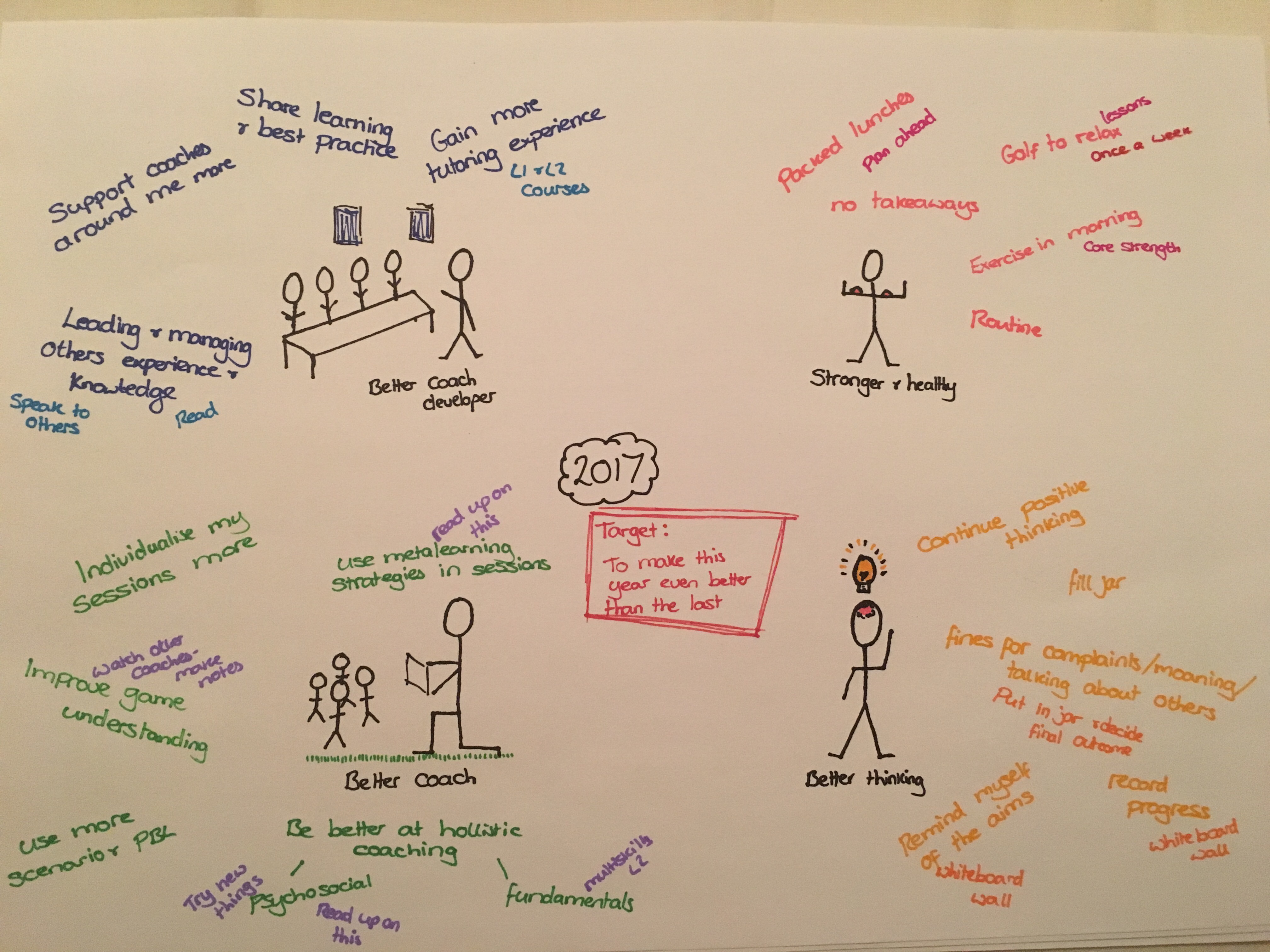
 This post is mainly here for me to say thank you to everyone who has helped me! My family for their support, my friends for their support (and Martyn who even appeared in one of my assessment videos!), all the coaches and players who took part in my research so that I could complete my assignments and finally my class mates who, despite my moaning and despite never actually meeting each other, kept me going for the whole course even when I wanted to give it up. I currently can’t drink alcohol (so orange juice has been substituted in a nice wine glass) but here’s to you all, thanks for your support, I could never have done it without you! Congratulations to all those who made it to the end, see you at graduation hopefully!


 Chloe Brown
